Sunday, December 16, 2012

Why I Do What I Do

I think I’ve finally made it. This week, one of my students started a Facebook group, Screenwriting 101 - Greeny Gone Wild, for former students of mine or anyone who is interested in what I might have to say about screenwriting.

Classes are over. The semester is history. At current count, I have read thirty screenplays and have thirty more to read by Monday. I am beat after fifteen weeks of lesson planning, lecturing and reviewing student work but now the end is in sight.

This week, a guy whom I taught two years ago asked me to read a feature length screenplay he wrote. As a break from grading, I read his work and returned it with extensive notes.

Then a couple of days ago, I heard from another former student, someone I had for two courses three or four years ago:

“You put forth dedication, heart and effort while looking over every one of your students' screenplays. I always appreciated that as a student of yours. This is why we keep in touch and I left that school knowing that I had ONE teacher that gave a shit.... you're the voice in the back in my head when I write anything from a press release to a 300 page EHR manual. 'Fewest best words.' You're incredible David Greenberg.”

When I finish grading student stuff, I get back to work on my own projects: a second draft of a documentary and an intensive rewrite of a screenplay by someone else.

I might not ever become a wildly successful screenwriter in the conventional sense and, at least once or twice a semester, I tell myself I can’t do it anymore. This is it. I’m done teaching. But every now and then, something comes along to remind me why I do what I do.

Sunday, December 9, 2012

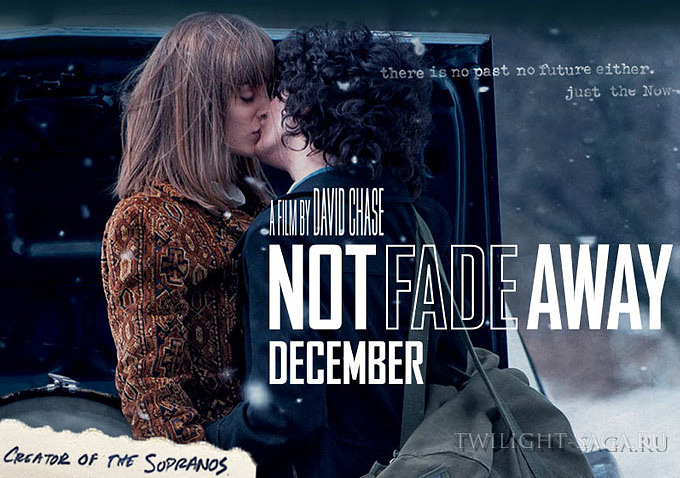
Chasing Chase: How to Not Fade Away


On the last day of screenwriting class this semester, I asked my students if they had ever heard of Twin Peaks. If any of these students were even alive when it premiered in 1990, they would have been very young. Still, most of them had heard of the show and responded enthusiastically. Then I asked if they had ever heard of another series about the comings and goings of a variety of offbeat characters in a small, remote town, Northern Exposure, which also premiered in 1990. One student was vaguely familiar with it and not especially enthusiastic.

While I got caught up in the initial Twin Peaks mania, I began to feel that it was going nowhere fast. It was a very cool idea for a show without really being about anything. By the second season, the charm had worn off and watching became a chore.  The writers seemed to be making things up as they went along.

Northern Exposure did not grab me from the start but I liked it, stuck with it and think that it actually got much better as it went along. I believe the reason was that veteran producer David Chase was brought in to oversee the show. Every episode felt like an offbeat but ultimately rich and beautiful independent film. Maybe I was missing something there but, after an episode of Twin Peaks, I could usually say, “That was cool.” After an episode of Northern Exposure, I felt like I had something to think about and discuss with others.

Chase started in TV as story editor in the seventies on one my favorite shows, Kolchak: The Night Stalker, but his career really took off when he became a producer on the well-regarded hit show The Rockford Files.  Chase created the critically acclaimed but short-lived series I’ll Fly Away before coming to work on Northern Exposure. After Northern, Chase created the HBO  series, The Sopranos. My students would have been little kids and young teenagers when the show ran. Few, if any, had seen it, but when asked, most had heard of it.

To explain the significance of The Sopranos in the context of episodic TV, I said to them, “Without The Sopranos  we would not have had The Wire, Breaking Bad, Sons Of Anarchy or American Horror Story, to name a few.”

I saw David Chase’s feature film debut, Not Fade Away, the other night. Growing up in northern New Jersey in the sixties, Chase was, like many kids in the Beatles era, pursuing rock and roll dreams. He was a drummer in a number of bands before finally deciding to go to film school. Not Fade Away is about a young man in sixties north Jersey playing drums in a band and eventually going to film school.  I hated the film not just because it was an incoherent mess but because its creator fell into the same traps that so many other filmmakers have fallen into over the years --- self-indulgently recreating, reliving and, to some degree, re-inventing their past to make it interesting to themselves more than to an audience. Based on nothing but instinct, I am guessing that, at one time, David Chase had a relationship -- or wished he did -- with a girl who looks like the female lead in his film. So much in this film must have been of great personal significance to the filmmaker but winds up feeling empty and pointless to the audience.

All of this stuff gets back to something that I bring up on the first day of class every semester: the role of the artist in society. Artists take in the world, observe and consider some piece of the human experience and then represent (or RE-present) it in some form to an audience. In a best case scenario, a work of art provokes the audience, stirring emotions and ideas. Either the audience responds and relates to it or reacts against it. We all have different experiences and we all have different tastes. Yes, you should draw on personal experiences and feelings about things you have seen and done; they should inform your work, but you have to remember to say something about the world other than that it exists. The producers of Not Fade Away clearly took great pains to be extremely accurate about period details. The problem is that we do not go to movies to see great production design; we go to see good stories about interesting characters working through circumstances that, in one way or another, we relate to, think about, and take something away from, deriving a new sense of the world and our place in it, whether we know it or not.

I tell my students on both the first and last days of class that, as artists, they need to decide what they want to be and what kind of work they want to do. They should be provocative; that is, create work that not only entertains but also strikes a chord and makes people think or feel something about the world around them, either on a small, intimate, personal level or on a broader, grander scale.

They cannot -- well, they should not -- spoon feed the audience simplistic, meaningless junk. I compare movies to food. There are health food movies and there are junk food movies. 

Their work should not just sit there like a bag of chips. Of course, as I tell them, people like chips, and following that model, like junk food movies. One can earn a pretty solid living making junk food.

All of the students in my class will be graduating in the next year or two. One way or another, all of them want to make a living in the film industry. Making art and making a living can be tough to combine.

I read a screenplay last week and I am getting paid to evaluate it. The script was in really bad shape and I dreaded the idea of talking to the writer, telling him how much I didn't like it. While I knew that I couldn't tell him it sucks, I could point out what is wrong with it, what is right with it and what it needs in order to be a good movie. I just got off of the phone with the writer. He knows that it needs work and he was really receptive to my ideas for it.  I am very likely to get hired to re-write the screenplay.  I will  find something in this story, something I can work with, something that I can make entertaining and, if I am lucky, meaningful. I will do my best on the job and, if I do my best, it just might wind up being a pretty decent screenplay. So, do I put myself through this? Why am I going to work so hard on it? Because this is what I want to do for a living.

Wednesday, November 21, 2012

The Silver Lining I found in "The Silver Linings Playbook"

Lately, I have been questioning everything --- if I can write, if I am a good screenwriter, or if I have just been fooling myself all along. That’s not necessarily a bad thing. The day I tell myself that I am good, that I have reached the peak of my ability, that there is nothing left for me to learn or accomplish, is the day that I should quit. A lot of people consider me to be a really good writer but there have been enough recent cases of people not understanding my stuff, questioning it  -  some of these questions or doubts even  coming from myself - that I need to re-evaluate. Of course, what good is an artist who doesn’t doubt himself every now and then?

I won't lie. Even if I did lie, you wouldn't believe me. I am not a superstar A-list screenwriter. At my position in the industry, competition is brutal. For every time that I have beaten out 200-300 other writers for a job, there are probably 20 - 50 cases where I am one of the guys who didn't get the gig.

I am not yet in a place where I can regularly turn down work. Okay, last year, I turned down a job writing a movie about teenage vampires.  The producer begged me to reconsider and I wound up writing a decent little movie that I'd actually like to see made.

A few weeks ago, I turned down another job. Asked to re-write a romantic comedy where the plot hinged on Multiple Personality Disorder, I said no.  Not because I didn't feel that I could do anything with the script. I said no because I felt I shouldn't do anything with the script, Mental illness is not something to take lightly or make fun of.

After seeing The Silver Linings Playbook, writer-director David O. Russell's smart, touching, moving and, yes, very funny movie about mental illness, I am so glad that I passed on that writing job. I declined a challenge on moral or ethical grounds. More than being a brilliant filmmaker, Russell is a daring filmmaker. He took a chance on something and, while I am sure that we were both given wildly different source material to work with, I decided against taking a chance on something similar.

As I write, I wonder if, rather than being intimidated, I should be inspired  and take another look at that mental illness screenplay. If I am doing my job, I can take a bad screenplay and make it good.  Russell took a chance, tried and succeeded.

David O. Russell is a master filmmaker. I don't use that phrase lightly. From the opening scenes, I could tell  it was made by a guy who is justifiably confident in his vision and his command of the craft. On a good day, I am a half-decent screenwriter. That means that I can and in fact have written a really good first draft of a feature length screenplay in two days. It also means that I can be slow, lazy and not push myself to find the most creative ways to tell a story.

With the exception of I (heart) Huckabees, the one film that I found strained, all of Russell's films are much more than just okay. All of his films are messy, complicated and difficult both in subject manner and production --- tales of his unconventional, inappropriate and even scary behavior on-set are the now the stuff of Hollywood legend. Like life, his films are always rough around the edges and sometimes even rougher within the edges. Before I even finished watching his hilarious but devastating first film Spanking The Monkey more than twenty years ago, I knew  I was watching the work of a filmmaker who not only knows his stuff but has something intelligent and challenging to say and the chops to say it in an unconventional way.

As a screenwriting teacher, I  instruct my introductory students in the simplest, most basic, conservative style of the form. I am hard on my students about proper structure and formatting. I want to see everyone established in the first ten pages. I want to see an Act Break on Page 30, not Page 29 or 31. I tell my students that, like Picasso and The Beatles, they have to know the rules before they break them. Even if it is my inclination to look for another way to tell a story, to push against the conventions of motion picture narrative, sometimes it is just easier to follow the rules.

Much as I liked the film, I am still pretty picky about movies. If anything, I think Silver Linings Playbook shifts from being primarily character driven in the first half, richly establishing Pat and Tiffany while letting the narrative go a little loose a bit,  to being more plot driven in the second half, where it focuses on the training for the big dance competition and the bookmaking concerns of Pat senior. While Bradley Cooper’s unstable Pat is the bumpy center of the story, Jennifer Lawrence’s similarly troubled Tiffany had much more to do in the first half, but her character settles into  dance instructor mode for much of the second half.  Lawrence doesn’t merely shine in her performance. She is on fire. It is such a good role, with so many great moments early on that it is a little disappointing that she doesn’t have quite as much to do in the second half. Regardless, it is a guaranteed Oscar-nominated performance.

If Russell does not totally break the rules all of the time, he usually applies them differently, always has, always will, while keeping a firm grasp on what makes movies work. He knows how to bend the rules and make movies that are still accessible. If Silver Linings Playbook initially doesn’t appear to adhere to three-act structure in the conventional sense, it somehow manages to wind up with an ending straight out of the Golden Age of Hollywood. Maybe the next time that someone asks me to write a mental illness themed romantic-comedy, I won’t be so dismissive.


Part 2: Philly on Philm, again.
After being disappointed with almost every movie I have seen recently, I really needed to see something that would restore my faith in the movies. I was predisposed to like Silver Linings Playbook because I am always rooting for films made in Philly, especially films with Philly roots ---- Silver is based on a novel by a local writer and star Bradley Cooper grew up in the burbs.

As a movie geek growing up in the 70’s, Rocky had a huge impact on me --- the idea that this virtually unknown actor from the area could write a screenplay, get a crew to come here from Hollywood and make a low-budget film that became a critical and commercial hit just blew me away.

Almost forty years later, there have been plenty of movies shot here but only a few of them have genuine Philly roots. Local author Jennifer Wiener’s In Her Shoes is great Philly film that showcases the city but it is not inherently Philly-centric. Similarly, one of my personal favorites, the delightful but criminally under-seen The Answer Man made great use of area locations.

Yes, technically, Silver... could have been set anywhere but the choice was made (presumably by Co-producer Cooper who, with last year’s Limitless seems to have an interest in bringing more work to the area)  to shoot in town.  In addition to the  thrill of seeing things onscreen that you can see in real life, it is a great feeling to realize that your friends and neighbors might have worked on the film. In Silver..., Cooper’s elusive wife is played by actress Brea Bee, who has done two readings of screenplays I wrote.. Cooper’s friend in the film, played by Chris Tucker, shows up at the end with a new girlfriend, played by Tiffany Green, who has also done a screenplay reading for me. I have lost track of how many former students I have seen in the end credits of nearly every film that shoots here.

Area native M. Night Shyamalan is famous for shooting all of his films in the region but, despite ample use of locations in and around the city, few of them have a distinctly Philly feel and it is unlikely that After Earth, his upcoming collaboration with local hero Will Smith, will have much of a local connection.

While people wait to see if there is any truth to the already-brewing rumors about another Cooper/Russell/Philly project in the works, I submit  my nod for best Philly-centric production.

I have to admit that I have not yet seen the recent film Backwards, the rowing drama written by and starring local rower turned actress/screenwriter Sarah Megan Thomas, that shot here last year. So, what is it? Nope, it is not Invincible, the wonderful film about school teacher turned Eagles star, Vince Papale. Nor is it 2008‘s Explicit Ills, the grungy, indie directorial debut of Philly-based actor Mark Webber (who made his acting debut in 1998‘s Edge City, a grungy, indie, fictionalized account of the notorious Eddie Polec tragedy, written and directed by my friend Eugene Martin) that features Roots maestro Tariq Trotter AKA Black Thought in a strong performance.

My pick is Pride, the story of Jim Ellis, who coached an inner-city swim team in the early ‘70‘s. Written by a local, Michael Gozzard. and starring area resident Terrence Howard, it is a true story, something that happened in town, was shot here and has a genuine Philly vibe.

Now, if I could only get another producer interested in taking on my been-to-Hollywood-and-back screenplay Aftermath, we would have something else to talk about.

Saturday, October 13, 2012

The Minimum Wage Screenwriter Rises -- a bit.

Where have I been? What have been doing? More of the same, more or less --- just from a different variety of mental and physical places.

After a mammoth 2011 in which I wrote eight features, two documentaries and a short or two, things slowed down - sort of.

On one day in April, I optioned an old screenplay, Morgan, Michael, Vanessa & Max” and I closed a deal to write a book, “100 Movies To Watch With Your Kids.” If all goes well, the film should be shooting sometime next year. The book is scheduled to come out in November.

“Sugar Cookie”, a short film based on an original screenplay of mine, premiered at a film festival in July. “Technical Support,” another short that I wrote, is in post-production and the same company is planning to shoot another short of mine, “Nightcap.” Last week, I delivered “Public Relations”, a short that I was hired to write a week earlier.

In June, I auditioned for and was cast in a small role in the upcoming indie feature “Rendezvous” that is shooting next year.

Sometime in August, I got hired to write a documentary about the racist promotional campaign for the 1982 heavyweight boxing championship bout between Larry Holmes and Gerry Cooney. The script is due at the end of the month. Somehow, as always, I will deliver it on time.

All of sudden, things are starting to heat up. In the past two weeks, I have gotten  inquiries --- meaning people coming to me, seeking me out ---  about writing three features.

Two days ago, I picked up another teaching gig: third screenwriting class and I quit my job as an acting teacher.

So why did I just submit my materials for four screenwriting jobs when I can barely handle those that I already have?

Saturday, January 28, 2012

"Don't Go In The Woods" if you are planning to make a bad horror movie.

I have been doing so much thinking about film in the past few weeks --- what makes a film, how to make a film, what to do with a film once it's made etc.

A lot of things are changing.

I just had to review this film by actor Vince D'Onofrio, best known for Law & Order but also "Full Metal Jacket" and "Mystic Pizza" etc.

It was really bad, like he wasn't even trying to make a good film. It's a horror musical and while the acting is terrible but the music is pretty good.

So, after I watched the film, I read up about it and even found an interview with him where he said that the plan was to "make a bad horror movie" where they intentionally cast unknown people who had music and singing experience whether or not they had acting experience. He cast a band that his nephew was friends with, he cast some girls who worked at the coffee shop around the corner from him and he cast a couple of girls who had been extras on Law & Order and they shot in 12 days on his property in upstate New York for $100,000 --- but I have no idea what they spent the money on.
Here is the review that I wrote:

“Don’t Go In The Woods”
by
David J. Greenberg

Sometimes, not often, there is a film that blurs the lines between being “bad” and being “intentionally bad.” So, out of respect to the esteemed actor Vincent D’Onofrio who is making his feature debut with the horror-musical “Don’t Go In The Woods”, the question is more pronounced. Given his resume that includes his iconic turn in “Full Metal Jacket” as well as critically acclaimed work in “The Whole Wide World” and ten years of “Law & Order” D’Onofrio the actor clearly knows his way around a quality project so it seems odd that he should choose, for his feature debut, to work from a screenplay that is so fundamentally flawed.

The film is about a scruffy New York indie folk-rock band that, on the insistence of the driven, intense leader, Nick, drives out to the woods where he vacationed as a child. The plan is that they will seclude themselves in nature for the weekend, find the inspiration to write a new batch of songs without the distractions of cell phones, drugs, alcohol or girls ---- a method that, historically, is employed for boxers more often than musicians.

Despite some great moments where they really gel as a band, hit their stride and truly play in concert with one another, it is clear that some of them take the situation far more seriously than others. As is so often the case in a band dynamic, the plan inevitably disintegrates but not before every member of the cast gets to sing their heart out in one or more of the numerous musical numbers. The presence of a sledgehammer wielding psychopath in the same woods only complicates matters.

One of the great mysteries of D’Onofrio’s film is that when he could have taken the same actors and made a great slice of New York City life story about a young band struggling to make it, for some reason, he chose to make a slasher film. Move the location to a seedy rehearsal space, lose the crazed killer element make it a story about art, hopes, dreams and the interpersonal dynamics of the band and there is more than enough for a solid film with ample room for his actor-musicians to shine. It is really hard to not think about “Once” when thinking about this film. Heck, it is really, really hard to not think about Tom Hanks directorial debut “That Thing You Do” which also covered a similar struggling band scenario.

The whole piece smacks of artistic experimentation, like D’Onofrio was making a test film and challenging his own notions of what acting is. The clue to this theory is that the film really only ever comes alive during the musical numbers. In general, the songs (written by co-screenwriter Sam Bisbee) are actually pretty catchy, decent takes on the acoustic indie-rock singer-songwriter vibe that would be right at home playing in the background of a scruffy little coffeehouse. That the cast, made up of enthusiastic, fresh faced but character-appropriate-grungy twenty-somethings, is clearly better at performing the music than they are at delivering lines seems to suggest D’Onofrio picked people with some musical skills who might or might not be able to act rather casting actors who have some musical skills. The difference might seem subtle on paper but, in action, it jumps out.

So, it seems like D’Onofrio is going for a degree of Neo-realism here ala Vittorio De Sica, Gus Van Sant’s “Elephant” and “Paranoid Park” and last years “Putty Hill.”

In that regard, the experiment pays off to a degree in that, overall, the attractive cast does have an appeal, they really do feel like a social circle plucked off the streets of NYC by someone who wanted to make a film about who they are - fresh, raw and palpably full of spirit, no baggage, giving it their all and probably not for the promise of what, presumably, was not a huge payday. Of course, this doesn’t necessarily mean that they are all especially talented actors.

Sometimes it seems like certain filmmakers are trying to make a point about bad films by going out and making a bad film, almost a sly send up of bad films. So what is this film, a drama with bad acting, a musical without a good story or a horror film without any scares? The whole thing feels as if it is really about D’Onofrio and some friends getting their feet wet, experimenting with film-making in anticipation of more ambitious projects to come. Does that legitimize releasing this film to the public?

I have seen a handful of films over the years where I have asked myself, "What would be more interesting, the film I just watched or a behind-the-scenes "making of" film about the film that I just watched?" Because, since watching "Don't Go In The Woods", I have now seen a number of interviews, behind-the-scenes, live concert footage etc. that was produced in connection with the film, I can easily say that the answer to my question would be the latter.

The whole experience of reviewing this film was so frustrating because, with some work on the script (or a whole new script) it could have easily been a half decent movie. I have written two horror screenplays about kids going out into the woods and both are ten times better than this film.

No, this movie is not getting a huge release, it's playing in one theater in L.A., one theater in NYC and going straight to VOD. Very interesting.

So what does all of this mean for me? Can I, a nobody, throw together a cast/crew of nobodies, run around, shoot a film and throw it up on the internet? Sure, I guess I can. Will anyone see it? I doubt it. Do I know that I have screenplays sitting around that were designed to be shot for little to no money? Sure do! If I go out and make one, will anyone see it? Who knows? Who really knows? A lot of things are changing.

Wednesday, December 21, 2011

100/5000

This week, Indiewire.com published its list of the Best Undistributed Films in their year end critics poll. More than 160 critics voted. Altogether, around 275 films made the list. Granted, some of these films have gotten distribution deals that have not yet been announced but, according to the site, the top five films, those that were mentioned the most, do not, at this time, have deals for theatrical distribution.

During the spring, summer and fall of 1988, I worked on two feature films, a low-budget indie (around 1.5 million dollars) and a moderately budgeted (around 20 million dollars) studio film. Both films were released in theaters, have played on TV and gotten home video releases.

Maybe it really was a simpler time or maybe I am just naive but today, even with all the avenues for film distribution -- VOD, online, theatrical, cable and on and on -- it seems like it’s harder to get a film out there. Maybe the movies are just not that good.

Everywhere I turn, I hear about an actress or actor friend shooting this film or that film and everyone seems to be a director or a producer promoting their new film as they are shooting it --- sometimes even long before they start shooting. I understand that marketing buzz, building brand awareness and consumer interest is the name of the game but it sometimes seem like that is the only thing happening. I hear about all these films in the pre-production, then production stage and then what, they’re gone.

So many of these film just seem to disappear without getting much, if any kind of “proper” release -- much less a theatrical run.

Maybe I am old school in thinking that having a movie shown in a movie theater is the ultimate goal. However, film is a public art, it succeeds when people see it and I am not just talking about having a screening at a bar for friends and family. Now, much as I love to see a movie on the big screen, I have to admit that I don’t go to movie theaters as much --- honestly, the picture and sound quality on my TV or computer is better.

Still, for me, a theatrical screening -- even if it is just at a film festival or two -- is the gold standard. Maybe I am small minded in thinking like this but, if I bust my butt and break the bank to make a film, it means more to me to have people make an effort to go see it in a theater than it does to know that they are clicking a button on their computer and watching it while they are checking their e-mail.

For some people, having a screening of their film -maybe renting out a screen at the local art house theater - for friends and family is as good as it will ever get. For some people, the gold standard is breaking even, maybe even having something to hand over to their investors.

If you really want to know what my feelings on the matter, I want to make a film that does “well enough” critically and/or commercially to inspire someone to back me on another film and the film after that one and the film after that one and so on.

I have never been a big fan of writer-director Edward Burns’ work but I have always been interested in his career --- from the legendary “pay the rent or enter ‘Brothers McMullen’ in Sundance?” story to his more recent forays into micro-filmmaking (his new film "Newlyweds" was shot for $9000.00) and promoting VOD as the saving grace for indie filmmakers.

I have been watching the business of indie films and how they get to their audience almost as long as I have been watching indie films. In the “anyone can make a film” era, saying that you are making a film does not carry much weight with me. Telling me that your film screened at a reputable festival, got picked up by distributor with muscle or even, yes, that it’s been downloaded/whatevered 500 times is going to impress me.

So, whether or not my thinking is stuck in the past is less of an issue for me. The Hollywood Economist Blogspot estimates that, worldwide, there are 4000 - 5000 independent features made each year and, of that number, only 2% will be purchased for distribution. Making a film is half of the battle, maybe not even half. Getting people to see your film is the real trick.

Of course, I will still look through the behind-the-scenes photos that you post on facebook and wish you the best.

Thursday, December 8, 2011

A Tale Of Three Indies

It might sound as if I have this indie bias, this Hollywood = Bad, Independent Film = Good. I get that and I realize that there are just as many, if not far more, really, really bad independent films out there.

Orson Welles once said that the difference between filmmakers and all other artists is that, for the most part, other artists can afford to make their art.

With today's technology, however, anyone can make a movie and, from my perspective, far too many people are making movies and, not that I am a math whiz by any stretch or into odds and probabilities, it just seems that, the more movies that are out there, the more chances for more of these movies to be bad increases. Some people see the glass half full, I see a little crack in the glass where stuff is slowly leaking out.

I recently saw the 2011 Sundance hit “Bellflower,” which I had been eagerly looking forward to seeing. I can’t even remember what, exactly, I had heard about it beforehand but it had been long on my radar and I thought it looked cool.

Remember, movies are about creating images, making people think that they are seeing something that they are not really seeing. When we see rockets whooshing across space, we are not seeing rockets, we are seeing something that is supposed to make us think that we are seeing a rocket. And so it goes for movie marketing, very often for indie movie marketing. It is all about getting people to see a movie that appears to be about one thing when, at least some of the time, it is about something else.

“Bellflower” is about two scruffy 20-something guys who drink straight from the bottle, smoke a lot and, apparently, do not value clean laundry. They are obsessed with “Mad Max”, building flamethrowers and fixing up an muscle car so that it, too, shoots flames --- in the event of an apocalypse. For some reason, I was under the impression that “Bellflower” was some kind of post-apocalyptic zombie movie. Maybe I really am an idiot, maybe I was duped by the marketing campaign.

If you do not want to know what “Bellflower” is really about, skip the next paragraph and continue reading after it, skip ahead.

“Bellflower” is about two scruffy 20-something guys who drink straight from the bottle, smoke a lot and, apparently, do not value clean laundry. They are obsessed with “Mad Max”, building flamethrowers and fixing up an muscle car so that it, too, shoots flames. One of the guys meets a really cute but also sort of scruffy girl who can smoke and drink like the best of them. Of course, they fall madly in love, have a sort of “let’s hit the road in my vintage automobile and have a distinctly American 20-something experience” road trip. Once back home, things settle down, he catches her cheating on him, loses it and has all kinds bloody, fire-y, depression, drug and alcohol fueled visions that blur reality (for the audience) --- what is really happening and what is not happening. Boy meets girl, girl cheats on boy, boy loses it for awhile but, in the end, he still has his best friend --- that’s what “Bellflower” is about.

You can start reading here.

“Bellflower” was made by two scruffy 20-something guys who look like they drink straight from the bottle, smoke a lot and, apparently, do not value clean laundry. They are obsessed with “Mad Max”, building flamethrowers and fixing up an muscle car so that it, too, shoots flames. They have a handful of similar friends and they all got together to make this film for about $17,000. I liked the look of the film. It looks like it was shot on one of those Hipstamatic cameras that were all the rage for about five minutes. These guys build their own cameras. I found the whole thing tedious, pretentious and empty. Maybe if I had not seen the marketing campaign or if I was still a hip urbane, scruffy 20-something (okay, I never was but I sort of wanted to be) experiencing first love, it would have resonated with me. “Bellflower” got mostly good reviews but, I am happy to say, there are others out there like me who, well, you get the idea.

That said, I do think that the female lead, Jessie Wiseman, really has star potential.

After watching “Bellflower” over the weekend, I showed the 2002 Sundance hit “Pieces Of April” to my students. I quite like this film and I always show it to classes right before Thanksgiving because that is what, among other things, the film is about. It is my favorite Thanksgiving film. “Pieces Of April” is a low-budget indie-style film. I say “indie-style” because, even though it is, technically, an independent film, it is deliberately, maybe even self-consciously lo-fi, shot on really bad digital video with marginal production values. It does, however, boast a great (well-known) cast -- Patricia Clarkson (in an Oscar-nominated performance), Oliver Platt and Katie Holmes (in her bid for artistic credibility by playing against type) and Derek Luke -- at the top of their game and, most importantly, it well-written and directed by Peter Hedges. I show it to illustrate the point that, if there is a good screenplay in place, it almost doesn’t matter how the film is shot. So many people throw so much time and money up on the screen without truly understanding and respecting the importance of having a good screenplay.

Later that week, I got another indie that I had been eager to see, “Putty Hill.”

I first heard about the film when IndieWire reported that there was an issue surrounding the distribution of the film because they had used a song by the Rolling Stones without clearing the rights. I thought to myself, “What kind of idiots take a copyrighted song by a well-known band, put it in their film without paying for the rights and expect to get it distributed?”

On day one or two of my screenwriting classes, I always tell my students to never specify copyrighted music in their screenplays but, the vast bulk of the time, doing so will add thousands dollars to the budget of the film --- and make the screenwriter look like an idiot.

So, I had to find out what this “Putty Hill” film was and what kind of losers would be so careless about the music. The film, it turns out, is a micro-budget indie about young people dealing with the aftermath of a tragic event. The film was shot on lower-end video in just a few days and largely improvised with a cast of non-professional actors.

Hmmm, sounds familiar. Anyone who knows me and what I have been up to for the past few years, knows about my long, sort-of-in-the-works project “Aftermath” --- which is about young people dealing with the aftermath of a tragic event and which was designed to be shot in a few days, without name talent for no money.

This, I had to see, a film that raised so many red flags for me. How could it be any good?

I really liked it.

“Putty Hill” is shot on slightly lower-end cameras. It does not have a slick, pristine look technically but there are some really well-composed shots and the final image has stayed with me. The story and execution are simple; the style, mood and atmosphere are rich, I could go on and on but, the bottom-line, the takeaway, is that, financial or technical short-comings do not have to be a handicap. Filmmakers need to know what they have to work with and focus on crafting strong, cinematic narratives first and practical, technical execution that will serve the story shortly thereafter.

Know what you want to do. Know what you are able to do.